
Patios on the Outer Banks age faster than patios anywhere inland. Salt air, shifting sand, and a full summer of heavy traffic all work on the surface and the ground under it at the same time. The trouble is that the early signs are easy to walk past for a season or two, and coastal problems rarely stay the size they started at. Here is what to look for and when patio repair is the right call.
Cracks That Are Getting Longer
A hairline crack in a patio surface is not automatically a problem. A hairline crack that is longer this spring than it was last spring is a different situation, because it means something underneath is still moving. Cracks that widen, branch, or run in a straight line across the surface usually point to the base rather than the material on top. Filling that crack without addressing what caused it just buys you a season. The right approach finds what is moving first, corrects it, then restores the surface so the repair actually holds.
Pavers That Have Shifted or Come Loose
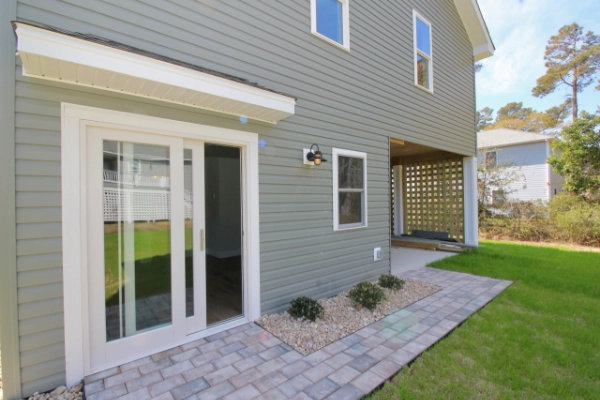
If a paver rocks under your foot, or if you can see the joint lines wandering out of alignment, the base beneath has moved. On the barrier islands that usually traces back to sand migration or water finding a path it should not have. One loose paver is a small job. Left alone through a storm season it becomes several, because each shifted unit takes pressure off its neighbors and lets the whole field spread. This is one of the most common patio repair calls on the coast and one of the easiest to fix early.
Sections That Have Settled Unevenly
Stand at the edge of the patio and look across it at eye level. A surface that reads as one plane is fine. A surface with a dip near the house, a low corner, or a section that has dropped below the rest has a settling problem, and settling is a base issue every time. Uneven sections are also the version of this that stops being cosmetic fastest, because a lip of even half an inch is a trip hazard, and on a property that gets rented to families every summer that matters beyond looks. Leveling a settled section works well when the base and the drainage get corrected in the same visit.
Joints and Edges That Have Worn Out
The joints between units do more work than most homeowners realize. They hold the field together, they let water move, and when they wash out the units start to travel. Worn joints show up as gaps, as sand or material missing between pavers, or as an edge that has started to spread outward with nothing holding it in. Chipped or spalling stone belongs in the same category, since a surface that is flaking has usually been taking on water for a while. None of this requires tearing the patio out. It requires someone who knows how to blend new work into the existing surface so the fix does not read as a patch.
Water That Sits After It Rains
Drainage is the quietest sign and often the most useful one. If puddles stand on the patio hours after a storm, or if water is running toward the house instead of away, the pitch has changed and the ground is telling you what it has been doing. Standing water accelerates everything else on this list, and near the coast it does not take long. If you have noticed the same puddle in the same spot for two summers running, that spot is where the next crack or settled section is going to appear.
Repair or Replace
The honest answer depends on how much of the patio is affected. Damage limited to the surface or to a few sections is almost always a repair, and repair is the more affordable path by a wide margin. Widespread structural failure, a sinking base under most of the footprint, or damage across the majority of the patio starts pointing toward replacement. Anyone worth hiring will walk the surface, tell you which of those two you are looking at, and explain the reasoning rather than defaulting to the bigger job. Brick, pavers, natural stone, flagstone, and gravel all get restored differently, and whether your patio is attached, covered, open, or multilevel changes the approach too.
Get Someone to Look at It
If you have been stepping around a loose paver or watching a crack grow, the next storm season is not going to help. Call SimpleSide Construction at +1 252 564 8505 or stop by 2407 N Croatan Hwy A, Kill Devil Hills, NC 27948 to schedule a free consultation and get an honest read on whether patio repair is the right call for your property.